

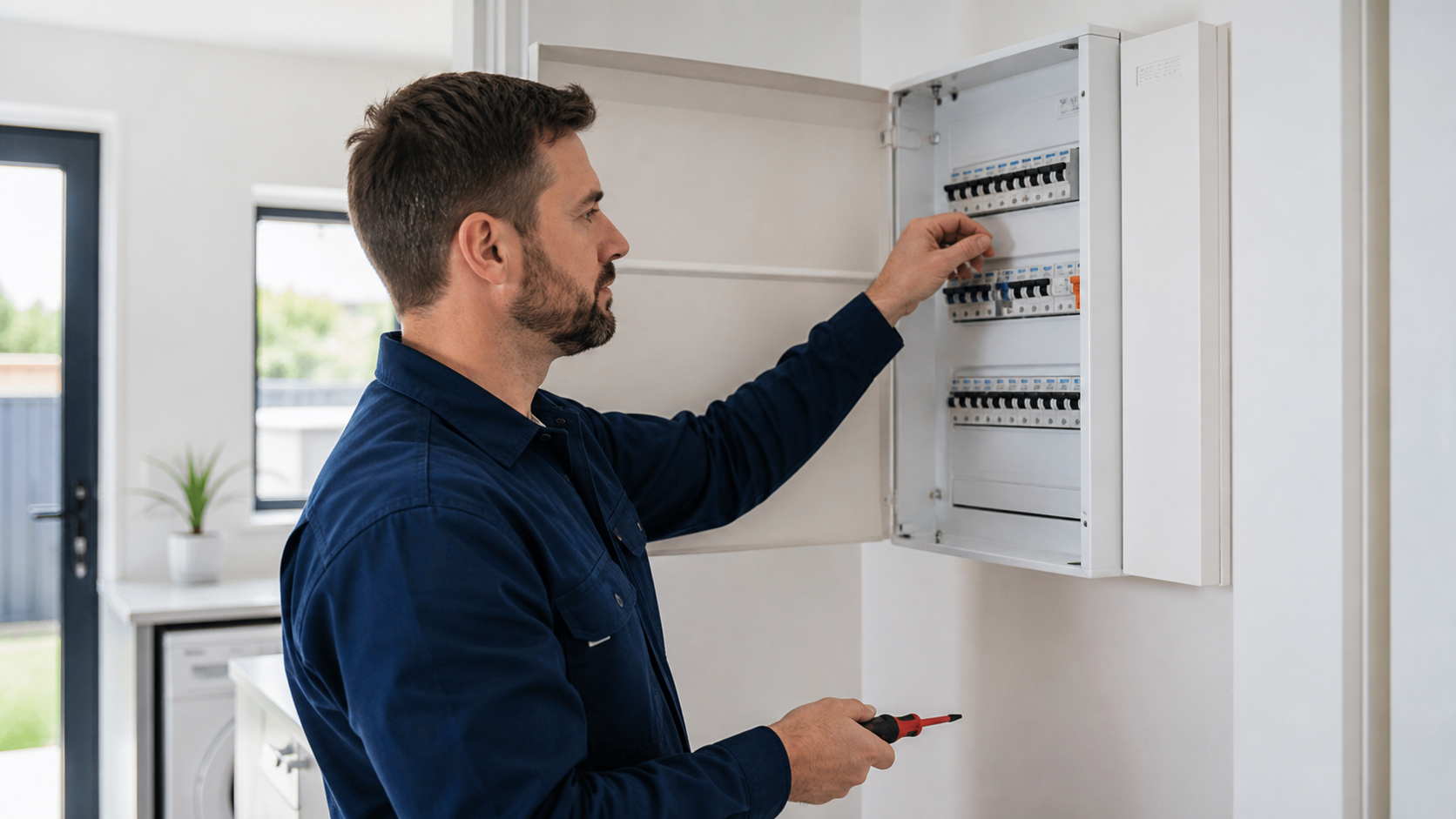
A repeated electrical trip needs a calm, safe response and professional testing when the cause is not obvious. This article explains the practical questions to consider before making a decision and how early professional advice can help avoid unnecessary cost, disruption or compromised results.
A safety switch and a circuit breaker do different jobs
Many property owners use the words safety switch and circuit breaker interchangeably, but they respond to different electrical conditions. A circuit breaker is generally intended to protect a circuit when there is an overload or short circuit. A safety switch, also called an RCD, is intended to operate when it detects an electrical leakage fault. The labels and layout on a switchboard vary, so it is best not to make assumptions from a single trip. What matters is that either device has responded for a reason. Repeated tripping is a signal to investigate the circuit or connected equipment rather than something to work around.
Start with safe observations, not a repair attempt
If power trips, first check for immediate warning signs. A burning smell, buzzing, heat, smoke, damaged cord, discoloured outlet, water near electrical equipment, shock or tingling sensation calls for the circuit to remain off and for a licensed electrician to be contacted. Where there is no immediate danger, note which rooms, outlets or equipment have lost power. This information may show whether the issue is isolated to one appliance or part of the installation. Do not remove switchboard covers, hold a switch in position or use improvised repairs to get equipment running again.
- Which circuit has been affected
- Appliances or equipment in use when it trips
- Any signs of damage, moisture or overheating
One appliance can trigger the problem
Portable appliances, extension leads and chargers are common places for a fault to develop. A damaged cable may not show an obvious break, and an appliance can develop an internal fault even when it has worked normally in the past. If it is safe to do so, switch off and unplug portable equipment on the affected circuit, then reset the device once. Reconnect items one at a time. If the trip occurs as a particular appliance is connected or operated, leave that item unplugged. Do not keep testing it. Record the item, time and circumstances, then arrange suitable repair, replacement or electrical advice.
Moisture and outdoor equipment deserve extra attention
Electrical faults can be more likely where water, condensation, weather exposure or damaged outdoor connections are involved. Kitchens, laundries, bathrooms, outdoor power points, sheds and equipment used around water can all need closer attention when a trip occurs. In rural and trade settings, pumps, irrigation equipment, workshop tools and leads may also be exposed to dust, weather, vibration or physical damage. The safe response is not to dry, tape or bypass a suspect item and continue using it. Isolate the equipment and give the electrician a clear description of when the fault appeared.
- Which circuit has been affected
- Appliances or equipment in use when it trips
- Any signs of damage, moisture or overheating
When the problem is likely to be in the fixed installation
A trip that continues with portable appliances unplugged can point to a fixed part of the electrical installation, although professional testing is needed to confirm the cause. The issue may involve a power point, lighting circuit, hard-wired appliance, cable, outdoor connection or protective device. A circuit that trips after rain, when a particular light is used or when a pump starts provides useful clues, but it does not identify the repair on its own. Baartz Electrical can test the affected circuit methodically so the recommendation is based on evidence rather than replacing equipment by trial and error.
Repeated resets can hide the useful clues
Resetting a device again and again is not a solution. It can also make it harder to explain the fault because the useful details are forgotten: what was running, which circuit was affected, whether the weather was wet and whether the trip happened immediately or after a period of use. Keep a short note or photo of the switchboard position if it can be done safely. This gives an electrician a better starting point and can reduce the time spent tracing a fault. A clear record is particularly useful for businesses, farms and rental properties where several people may have used the equipment before the issue was reported.
An older or crowded switchboard may need assessment
Repeated trips do not automatically mean that an entire switchboard needs replacement, but they are a reason to understand the condition and capacity of the existing board. Older boards, limited space for new circuits, damaged components or changes to the property electrical load can all warrant a conversation with an electrician. An assessment can also be useful before adding a split-system air conditioner, pump, workshop equipment, irrigation controls or new electrical circuits. Planning this work before a failure is usually less disruptive than making decisions during an urgent outage.
What to tell your Oakey electrician
The most useful details are simple: which switch has tripped, which rooms or equipment lost power, what was switched on beforehand, whether the issue followed rain or cleaning, and whether the trip returns immediately. Mention any recent electrical work, damaged leads, new appliances or changes to equipment use. Do not worry about diagnosing the fault yourself. Accurate observations are more valuable than a guess. Baartz Electrical services Oakey, Jondaryan and surrounding areas across domestic, commercial and rural electrical work, and can use this information to begin fault finding efficiently.
When prompt professional help is the right call
Leave the circuit off and seek prompt electrical help when the device cannot be reset, the trip returns with equipment disconnected, the property has a burning smell or visible damage, or there is any concern about water or electric shock. The same applies when critical business, rural or household equipment cannot operate safely. Electrical protection exists to reduce risk. Treating a repeated trip as a maintenance issue to be properly tested is the practical way to restore power safely and prevent the same problem from returning.
A sensible response plan when power goes off
Start by treating the trip as useful information, not as a reason to rush. Make the area safe, turn off or unplug portable items on the affected circuit where it is safe to do so, and identify what has lost power. A fridge, pump, shed, kitchen or lighting circuit may have different equipment connected to it, so a quick written note is more useful than relying on memory later. If there is a smell of burning, visible damage, water near electrical equipment, a tingle or another immediate hazard, leave the circuit off and contact a licensed electrician rather than attempting more resets.
What a fault-finding visit is designed to establish
Professional fault finding is a process of testing, not guessing. An electrician can work through the affected circuit, protective devices, outlets, fixed equipment and any relevant appliances to identify where the fault is occurring. The outcome may be as simple as isolating a faulty appliance, or it may show that a power point, lighting circuit, outdoor connection, pump supply or switchboard component needs attention. Asking for a clear explanation of the finding and recommended repair helps the property owner understand what has been fixed and what should be monitored.
Plan switchboard work before an urgent failure
A switchboard is easier to assess and improve when the property still has normal access to power. If the board is older, contains outdated components, has limited capacity for added equipment or is showing repeated issues, arrange a discussion before the next fault becomes disruptive. This is especially useful when planning air conditioning, workshop equipment, pumps, irrigation equipment, grain-handling equipment or other electrical additions. Baartz Electrical can assess the existing installation and explain practical next steps for Oakey and surrounding properties.
Next step
If a safety switch or circuit breaker keeps tripping, contact Baartz Electrical for professional fault finding and switchboard advice in Oakey and surrounding areas.